Risk & Decision Making
The Calculus of Catastrophe: Lessons in Risk and Responsibility from Margin Call
A reading of Margin Call as a study in risk management, quantitative models and decision-making under pressure — why systemic failure is a procedural outcome of rational actors operating under flawed incentives, and how risk reporting to leadership can be made effective.
Mohamed Magzoub Mahmoud · 8 min read
Movie Overview and Overarching Message
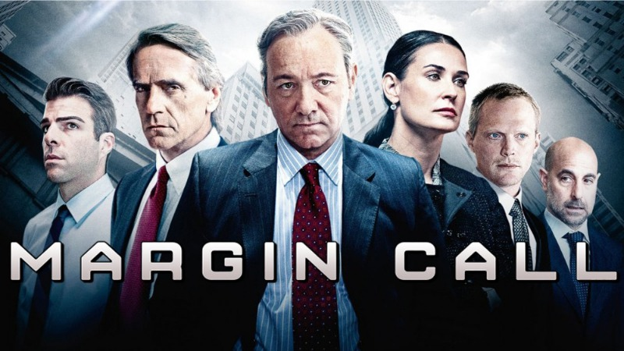
Margin Call is described as a “lean character-driven chamber piece” set during the initial tremors of the 2008 financial collapse. The film takes place over a single, high-stakes 24-hour period within an investment bank, focusing on the human response to a catastrophic mathematical discovery. Rather than using sweeping charts, the movie explores the ethical clarity and moral pressure felt by professionals when a model’s calculations translate directly into human cost.
The overarching message of the film is that systemic failure is not an accident but a procedural outcome of rational actors operating under flawed incentives. It conveys that while financial systems are built on complex data, they are ultimately guided by human decision-making and “reflected consciences”. The movie suggest such crises could be mitigated through early identification of systemic failures, empowered risk management divisions that report directly to leadership, and a move away from “short-term survival” incentives that trump social responsibility.
The Critical Importance of Risk Management
Risk management functions as the “R&D unit” of a firm, testing whether information can be converted into survival. In Margin Call, the crisis begins when a risk manager is let go before finishing an audit, highlighting how operational technology and data work are the front lines of defense. Effective risk management requires identifying when a firm’s leverage multiple has breached sustainability. The film illustrates that when “internal dashboards reveal that the shipped product may destroy the company,” the role of the risk officer is to provide a “truth-telling” counterweight to the pursuit of short-term gains.
Mathematics and Quantitative Models: The $8 Trillion Equation
The modern financial world relies on equations that support trillions of dollars in paper assets. Mathematics in this context is the “mundane machinery” that converts uncertainty into executable policy. However, the movie emphasize that quantitative models are only as good as their underlying assumptions. The failure in the film — and in reality — stems from models calibrated on “historically stable volatility” that catastrophically fail when volatility becomes abnormal. When the “leverage multiple” is catastrophically inverted, the math becomes a “verdict on human welfare,” moving from abstract numbers to a “destiny” for the firm.
Decision-Making in the Eye of the Storm
In the context of a margin call, choices accumulate into either ruin or survival. The film identifies three ways to survive in the business: “be first, be smarter, or cheat”. The most critical decision portrayed is the choice to “sell it all today” — offloading toxic assets that the firm knows have no value — to ensure the institution’s survival. This is described as “rational choice theory stripped of disguise,” where leaders must weigh survival against the “reputational risk” and the broader “social responsibilities” they might be abandoning. Ultimately, the film demonstrates that the most devastating decisions are often executed not in chaos, but in a “calm under fluorescent light” by professionals simply doing their job.
Risk Management Reports to Leadership
To improve how risk management reports to leadership, organizations must bridge the gap between complex mathematical modeling and executive decision-making. The Movie suggest that effective reporting requires a shift from “mundane machinery” to actionable communication that addresses structural and psychological barriers.
Key methods to enhance this reporting relationship include:
- Solving the “Organizational Cost of Translation”: Risk managers often face the challenge of compressing “raw quantitative anxiety” into a “single qualitative phrase”. While each layer of abstraction gains actionability, it often loses vital detail. Reporting should aim for a balance where complex derivatives are turned into “sound bites” that still accurately convey the “existential scale” of the risk.
- Eliminating “Bureaucratic Attenuation”: Historically, quantitative teams rarely reported directly to the board; instead, their warnings traveled through layers of mid-management that often diluted technical urgency into “diplomatically vague summaries”. Better reporting requires direct access to leadership to ensure that accountability is not diluted.
- Counteracting “Career Preservation Biases”: Early identification of systemic failure does not guarantee correction if leaders are incentivized by short-term survival or shareholder obligations. Reporting must be designed to override the “instinctive fear responses” of leadership with probabilistic reasoning, forcing a confrontation with data that might contradict public narratives.
- Implementing “Quantitative Transparency”: Using real-time dashboards — similar to a “cost clock” that translates drift into dollar impact — can fundamentally change leadership behavior. When data integrity is treated as a risk metric, it creates a feedback loop where awareness produces immediate operational changes.
- Empowering Risk Officers with Institutional Leverage: The risk analyst must be viewed as a “truth teller” rather than a “symbolic sacrifice”. Reporting is only effective if the risk division has the authority to enforce reform, rather than being ignored due to a “leadership vacuum” or “compliance inertia”.
Ultimately, the goal of reporting should be to convert “tight dramatic experiments” into “durable intellectual capital,” ensuring that leadership understands the “human calculus” behind the numbers before the ground starts shifting.
Finally
The financial crisis depicted in the film was not a random accident but a procedural outcome of rational actors operating under flawed incentives. The specific reasons for the crisis include:
- Reliance on Flawed Mathematical Models: The firm’s risk models were calibrated on historically stable volatility and catastrophically failed when volatility became abnormal. This “statistical blindness” meant that the equations supporting trillions of dollars in assets no longer held true.
- Unsustainable Leverage: The firm’s leverage multiple breached sustainability, leading to an exposure-to-capital ratio that was “catastrophically inverted”. Projections showed that if assets decreased by just 25%, the loss would exceed the entire market capitalization of the company.
- Subordination of Risk Management: Within the firm’s hierarchy, risk management was subordinated to trading executives. Quantitative teams rarely reported directly to the board, and their technical warnings were often diluted into “diplomatically vague summaries” by mid-level managers.
- Career Preservation and Information Gaps: The crisis was exacerbated by a “leadership vacuum” and a “quiet dread of knowing too much,” where employees prioritized short-term survival and job security over escalating systemic failures. Key risk personnel were even let go before they could finish critical audits.
- Incentive Distortion and Moral Hazard: The firm’s culture prioritized “monetization of moral hazard,” offering “attention bonuses” to traders for offloading toxic assets they knew were worthless. This “rational choice theory stripped of disguise” prioritized the institution’s survival over broader social responsibility.
- Diffusion of Responsibility: Systemic failure was driven by “ordinary competence applied without reflection,” where professionals adapted their morality to their specific roles. This allowed humane-seeming people to rationalize decisions that would inevitably cause widespread pain to others.
- Market Contagion through Forced Liquidation: The decision to “sell it all today” and dump toxic assets before the market could reprice them secured a “first-mover advantage” for the firm but accelerated contagion by devaluing similar assets held by others across the global economy.